Student Side Hustles & Income
How to Stay Motivated During ASUU Strike: 9 Practical Steps


How to Stay Motivated During ASUU Strikes or Long Breaks (9 Steps That Actually Work)
If you have ever packed your bag for school, only to hear that lecturers have stop working, then you already know the strange feeling I am about to describe. One day you are running around for lectures, assignments and tests. The next day the hostel is quiet, the timetable is useless, and your phone becomes your best friend.
I am a Pharmacy student, and I know how easily a long break can drain your energy. Nobody warns you about this part. It is not that you suddenly become lazy. It is that your normal structure disappears, and motivation quietly goes with it.
This post is my honest guide on how to stay motivated during an ASUU strike or any long break. I am not here to take sides or talk politics. I am here to talk about what you and I can control: our time, our habits, our skills, our mind and our money. I have combined my own experience with recent reports, student stories and simple habit science, so you can use it whether school is closed today or you just want to be ready in case it happens.
Here is what we will cover:
- Why motivation drops so fast when school stops
- What is happening in Nigerian universities right now (in plain, neutral terms)
- 9 practical steps to stay motivated, productive and sane
- Mistakes to avoid
- A simple 7-day restart plan and answers to common questions
Let’s get into it.
Why Motivation Drops So Fast During a Strike or Long Break
Before we fix the problem, let’s understand it. When school is on, your day is held together by outside pressure: lecture times, deadlines, attendance, tests, lecturers, classmates. You may complain about all of that, but it gives your day a shape.
When the strike or break starts, that shape vanishes overnight. Three things usually follow:
- You lose your deadlines. Without a date to work towards, the brain says, “There’s still time.” Days blur together.
- You lose your environment. Your reading spot, your friends, the library and the hostel rhythm all change, and those cues used to trigger study mode.
- You lose certainty. “Will we resume next week or next semester?” is a heavy question. Uncertainty is tiring because you cannot plan around it.
Here is the good news. Feeling unmotivated during a break is normal. It does not mean you are lazy, and it does not mean you are failing. It means your environment changed and your habits have not caught up yet. That is fixable.
What Is Happening Right Now (A Quick, Neutral Update)
I promised no politics, so I will keep this factual and short, because context helps you plan.
The Federal Government and ASUU signed a renegotiated agreement in December 2025, which reports say came after more than eight years of negotiation. Among its headline items was a 40 per cent pay rise for lecturers, alongside changes to pensions and allowances, with rollout planned from the start of 2026.
Since then, the news has been mixed. In September 2026, the union warned that it could revive its suspended nationwide action without further notice if implementation issues were not addressed. At the state level, some branches have already gone on strike. For example, ASUU-LASU declared a total and indefinite strike on 15 September 2026, and all three Lagos State-owned universities were affected. In another case, the Kaduna State University branch suspended its strike from 18 September 2026 after the state government approved implementation of the agreement. And the Taraba State University branch issued a final 14-day ultimatum that expires on 28 September 2026.
Earlier in the year, a July 2026 report described lecture halls at the University of Cross River State staying silent for about eight weeks.
What does this mean for you? Two things:
- Whether your school is closed right now or not, long breaks are a real possibility for many Nigerian students, so building a “strike-proof” routine is a smart skill.
- Situations change quickly. Some schools are shutting down while others are resuming. So do not build your whole motivation around a date. Build it around habits you control.
(Please check trusted news sources and your own school’s official notices for the latest update on your campus.)
The Trend I Am Seeing: Students Are Turning Breaks Into “Build Time”
Here is what stands out from recent student conversations and articles: more students are treating a strike as build time, not waiting time. Recent guides for Nigerian students encourage starting a TikTok, YouTube channel or blog around your interests, and offering services such as photography, editing or social media management. Another recent piece urged students to build a skill, start a small business, volunteer or take professional courses instead of staying idle. And real students have long shared similar stories. In a Zikoko feature, one student described working as a full-time illustrator and using strike periods to rest, do better work and find more freelance jobs.
I like this trend because it is practical. You do not need to be a genius or have big capital. You just need to decide that this time will not be wasted. The 9 steps below will help you do exactly that.
Step 1: Accept the Feeling First (Then Reset Your Mindset)
The first mistake most of us make is fighting the frustration. We pretend we are fine, or we stay angry for weeks. Both waste energy.
Give yourself two or three days to be disappointed. Sleep more. Talk to your friends. Complain if you must. Then draw a line and say: “Okay, this is the situation. What can I do with it?”
That small mental shift, from “this is happening to me” to “what can I do with this?”, is the foundation of everything else. You are not ignoring the problem. You are choosing where to spend your energy.
Try this: Write one sentence in your notes app: “For the next 30 days, my focus is ______.” Fill it with something you control, such as “revising my 300-level courses” or “learning video editing.”
Step 2: Set 30-Day Goals That Don’t Depend on the School Calendar
“Until school resumes” is a terrible goal because you do not control it. Replace it with 30-day goals that stay valid whether school resumes tomorrow or in three months.
Good 30-day goals are specific and measurable:
- Finish one online course and complete its final project
- Revise two difficult courses from the previous semester
- Save a fixed amount of money each week
- Build a small portfolio with three samples of your work
- Read one non-academic book
Pick one main goal and two smaller ones. More than that and you will start many things and finish nothing. Write them down and place them somewhere you will see them daily, maybe as your phone lock screen.
Step 3: Build a Simple Daily Routine (This Is the Real Secret)
If I could give only one tip, it would be this one. Structure beats motivation. Motivation comes and goes, but a routine carries you on the days you don’t feel like doing anything.
You do not need a strict military timetable. Keep it light, realistic and flexible. Here is a sample you can copy and adjust:
| Time | Activity |
|---|---|
| 6:30 – 7:30 AM | Wake up, freshen up, light exercise or a walk, breakfast |
| 8:00 – 10:00 AM | Deep work block 1: revision or your main course/skill (phone on airplane mode) |
| 10:00 – 10:30 AM | Break, snack, chores |
| 10:30 AM – 12:30 PM | Deep work block 2: skill practice or income-related work |
| 12:30 – 3:00 PM | Lunch, rest, family or friends time |
| 3:00 – 4:30 PM | Light tasks: errands, content planning, replying to messages |
| 5:00 – 6:00 PM | Exercise, football, a walk or church/mosque/community activity |
| 7:00 – 8:30 PM | Free time, dinner, entertainment |
| 9:00 – 9:30 PM | Plan tomorrow in 5 minutes, then wind down |
| 10:30 – 11:00 PM | Sleep |
A few tips to make this work:
- Anchor your day with a fixed wake-up time. It is the easiest habit to keep and it makes every other habit easier.
- Use “if-then” plans. Instead of “I will study more,” say “If it is 8:00 AM, then I sit at my table and open my notes.” Research on habit formation suggests that specific plans like this are more likely to be followed than vague intentions.
- Give it time. One widely cited habit study found that it took people about 66 days on average for a new behaviour to feel automatic, with big differences from person to person. So do not quit in week one.
If light or power is your challenge, plan your deep work around when you have electricity and charge your devices early. Nigerian problems need Nigerian solutions. Also see my guide on setting up a distraction-free study corner for a workable reading space.
Step 4: Keep Your Academics Alive (Without Burning Out)
This is where many students slip. Months pass, resumption is announced, and suddenly everything you learned last semester feels foggy. You can avoid that with light, consistent revision.
Here is a method that works for me:
- List your courses and rate each from 1 to 5 based on how confident you feel.
- Start with the weak ones. Give each 45 to 60 minutes, three or four times a week.
- Use past questions. Solving questions is more effective than only reading notes, because it forces your brain to recall information.
- Teach someone. Explain a topic to a friend or even to yourself out loud. If you cannot explain it simply, you have found what to revise.
- Form a small online study group (three to five serious people). A weekly Google Meet or WhatsApp voice call keeps everyone accountable.
Do not try to “cover the whole syllabus” in a week. That is a recipe for burnout. Slow, steady revision keeps knowledge fresh and reduces panic when exams finally come.
For my fellow science and health students: use the time to strengthen foundations, such as anatomy, biochemistry, pharmacology principles or basic calculations. Strong basics make later courses easier. Whatever your course, ask yourself: “Which topic would I be scared to see in an exam?” Start there.
Step 5: Learn One Marketable Skill (Just One)
A degree is important, but skills open doors faster, and a long break is the best time to build one.
The trap is trying to learn five things at once. Choose one skill and go deep for 30 to 60 days. Some options that fit Nigerian student life:
- Graphic design (Canva, then Photoshop or Figma)
- Video editing (CapCut, DaVinci Resolve)
- Content writing and blogging
- Social media management
- Basic data skills (Excel or Google Sheets, then simple dashboards)
- UI/UX design or web design
- Coding basics (HTML, CSS, JavaScript, Python)
- Using AI tools well for research, writing support, design ideas and productivity
Older strike guides already recommended taking short online courses and free portals like Coursera or edX, where the goal is knowledge that supports your career, not only a certificate. That advice still holds today. Programmes such as the Federal Government’s 3MTT technical training scheme have also been popular among young Nigerians, but check the official website to see whether a cohort is currently open before you plan around it.
How to learn without getting overwhelmed:
- Follow one learning path (a single YouTube playlist or one course) instead of jumping between tutorials.
- Practise with a mini project every week. Design a flyer, edit a two-minute video, write an article.
- Save your best work in a simple portfolio (a Google Drive folder is fine to start).
Check out my list of free apps every Nigerian student should have to find tools that make learning easier.
Step 6: Try to Earn a Little (Start Small, Start Smart)
Let’s be real. Many of us feel demotivated because we are broke, and a long break can add financial stress. A small income, even a modest one, is a powerful motivator because it gives you proof that your effort produces results.
You do not need big capital. Start with what you already know or can do:
- Service-based hustles: graphic design, video editing, typing and document formatting, social media handling, tutoring, CV writing, content writing
- Simple selling: thrift (okrika) clothes, snacks, phone accessories, foodstuff in small quantities
- Digital income: blogging, YouTube, affiliate marketing (be patient, as these take time)
- Local opportunities: helping small businesses in your area with their social media pages, flyers and posters
A few rules to keep you safe and consistent:
- Start with one hustle, not five.
- Get your first customer before you spend big. Test the demand cheaply.
- Avoid “get rich quick” schemes. If someone promises big returns for little effort, be careful. Investment scams and Ponzi-style platforms target students during hard times.
- Never send money to unknown “recruiters” or pay to receive a job.
- Track every naira. Keep a simple record of what comes in and goes out.
Read more in my full guide on student side hustles that actually work.
Step 7: Protect Your Mind and Body
Motivation is not only about goals and timetables. If your body is tired and your mind is heavy, no timetable will save you. This step is often skipped, but it matters most.
Limit strike news and social media doom-scrolling
It is tempting to refresh the news every ten minutes, hoping for a resumption date. That habit will drain you. Instead, check updates twice a day (say morning and evening) from one or two trusted sources, such as your school’s official channels and reputable news outlets. Ignore rumour-filled WhatsApp broadcasts.
Sleep, eat and move
- Sleep at consistent times. Staying awake until 4 AM and sleeping until noon will make you feel worse, even if you “did nothing wrong.”
- Eat proper meals when possible. Skipping meals to save money is understandable, but it lowers your energy and focus. See my guide on cheap foodstuff combos for students.
- Move your body for 20 to 30 minutes most days. A walk, skipping rope, football, push-ups or a simple home workout is enough.
Stay connected to people
Isolation makes everything heavier. Call a friend, join a study or hobby group, attend church, mosque or community gatherings, or spend time with family. Talk about how you are really feeling, not just the jokes.
Know when to ask for help
If you notice that you feel hopeless, cannot sleep for many days, or lose interest in everything for weeks, please speak to someone you trust, a counsellor, a health professional or your campus counselling or health unit. This is not weakness. It is what a wise person does. This article is general advice and not a substitute for professional care.
Step 8: Manage Your Money and Data Wisely
A long break can put pressure on your pocket. You may be at home with no allowance top-ups, or in school with reduced income while still paying for rent and food. Here is how to stay steady:
- Make a simple weekly budget. Write down what you have, what you must spend and what you can save. My semester allowance management guide can help.
- Use data with a plan. Download lecture videos and course materials when you have a good network or a cheap bundle, then study offline. My post on saving money on data and airtime has practical tips.
- Prioritise free resources first. There are free courses, free templates and free tools for almost everything. Pay only when you have a clear reason.
- Avoid unnecessary comparisons. Someone else’s income screenshot does not show their full story.
Step 9: Get an Accountability Partner and Track Small Wins
The final step is the one that makes the others stick: do not do this alone.
- Find an accountability partner. Text them each evening with what you completed that day. Even a short “Done: 2 hours revision, 1 hour design practice” works wonders.
- Track streaks. Use a paper calendar or a habit app. Mark each day you complete your main task. Seeing a chain of ticks is surprisingly motivating.
- Celebrate small wins. Finished a course module? Completed a week of your routine? Reward yourself with something simple, a favourite meal or a match with friends.
- Do a weekly review every Sunday. Ask: What went well? What blocked me? What is my one focus for next week?
Common Mistakes to Avoid During a Long Break
I have made some of these myself, so no judgement here.
- Waiting for the resumption date to “start seriously.” Time keeps moving whether or not school is open.
- Trying to do everything at once. Too many goals lead to burnout and quitting.
- Comparing your progress to others online. Everyone’s situation is different.
- Sleeping all day and calling it rest. Real rest refreshes you. Endless oversleeping does the opposite.
- Spending on courses and gadgets you won’t use. Start free, invest later.
- Ignoring your academics completely. A little revision each week saves you from panic later.
- Falling for quick-money schemes. If it sounds too good to be true, it is.
- Bottling up stress. Talk to someone.
My 7-Day Restart Plan (Use It Today)
If you are feeling stuck right now, do not try to fix everything. Just follow this small plan:
- Day 1: Write your 30-day goal and choose your wake-up time.
- Day 2: Set up your study space and download the materials or courses you need.
- Day 3: Do your first two-hour deep work block. Phone on airplane mode.
- Day 4: Pick your skill and finish the first lesson.
- Day 5: Create something small (a flyer, a short video, a paragraph) and share it with a friend for feedback.
- Day 6: Find an accountability partner and send your first update.
- Day 7: Review the week, celebrate what you did, and adjust.
Do this once, and you have already beaten most people who are “waiting for things to change.”
Frequently Asked Questions
What should I do during an ASUU strike?
Keep a simple daily routine, revise your course materials in short sessions, learn one marketable skill, look for a small income opportunity, and protect your mental health. Doing a little every day beats doing a lot once in a while.
How can I stay motivated when I don’t know when school will resume?
Stop waiting for a date. Set 30-day targets that do not depend on the school calendar, such as finishing a course, saving a fixed amount or revising two courses. Progress you control keeps motivation alive.
Is it okay to rest during a long break?
Yes. Rest is part of staying motivated. Give yourself a few days to switch off, then rebuild a light routine so that rest does not slowly turn into drifting.
How do I avoid forgetting what I learned before the strike?
Use spaced revision. Review your notes for 30 to 60 minutes a few times a week, solve past questions, and explain topics aloud to a friend. Short, repeated revision keeps knowledge fresh.
Can I make money during a strike as a student?
Yes, if you start small with a skill you already have, such as graphic design, video editing, tutoring, content writing, thrift selling or social media management. Get your first customer before you spend money on anything.
Final Thoughts
Strikes and long breaks are frustrating, and I will not pretend otherwise. Many students lose months, plans and peace of mind. Your feelings about that are valid.
But here is what I keep coming back to: you cannot control the calendar, but you can control your days. A routine, a small goal, one skill, a little income, some rest and a good support system can turn a time of waiting into a time of building. Whenever school opens again, you will walk back in stronger, sharper and better prepared than the version of you who stopped.
Start with one small thing today. Set your wake-up time. Write your 30-day goal. Open that course. Then come back tomorrow and do it again.
If this guide helped you, share it with a friend who needs it and drop a comment telling me how you are spending your break. I read them, and your ideas might help another student too.




How to Stay Safe Walking Around Campus at Night

Dealing With Landlords: A Student’s Off-Campus Guide

How to Do Laundry Without a Washing Machine (Fast Guide)

DIY Reading Table for Under ₦10k: How I Built Mine in a Weekend
How to Deal With NEPA (Power) Outages as a Student

DIY Water Storage Solutions for Hostels With No Water
-
 Hostel & Self-Contain DIY4 days ago
How to Do Laundry Without a Washing Machine (Fast Guide)
-
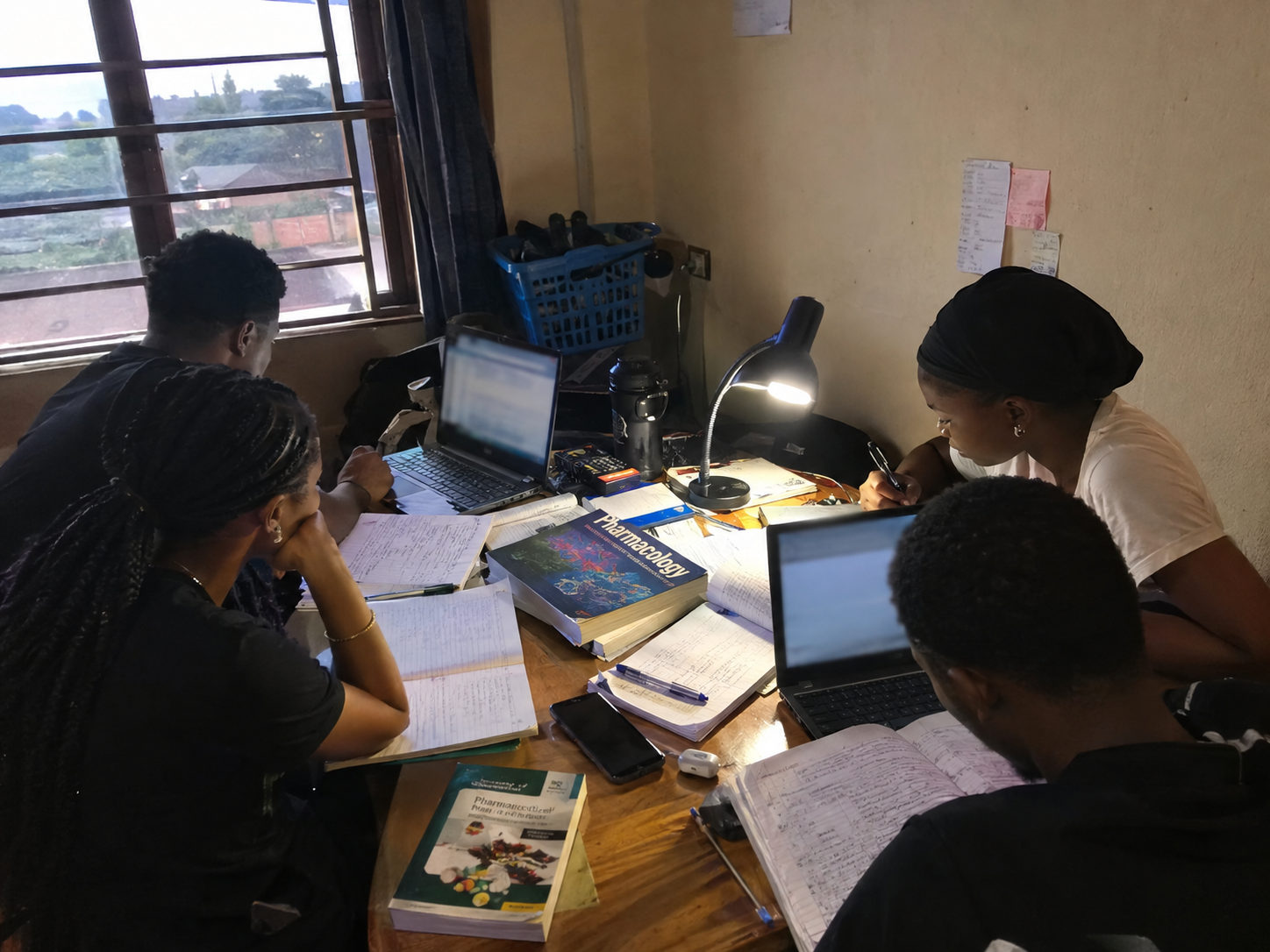 Hostel & Self-Contain DIY4 days ago
DIY Group Study Setup for a Small Common Room or Balcony
-
 Campus Survival Guide17 hours ago
Dealing With Landlords: A Student’s Off-Campus Guide
-
 Study & Productivity2 weeks ago
Best Free Apps Nigerian Students Actually Use for Note-Taking and Planning in 2026
-
 Hostel & Self-Contain DIY2 weeks ago
How to Study for Exams With a Noisy Roommate (UNN Guide)
-
 Study & Productivity2 weeks ago
How to Set Up a Distraction-Free Study Corner in a Shared Room
-
 Campus Survival Guide16 hours ago
How to Stay Safe Walking Around Campus at Night